

Climate-Friendly Uniform Fabric For Indian Hotel Staff
India’s geographic diversity requires multiple hotel uniform fabrics and designs for its hotels, as per the climate. The fabric used in different regions of India must be tested because it performs better in specific areas. The process of selecting suitable hotel uniform material begins with understanding the actual location of your establishment, as weather conditions directly affect comfort, durability, and overall staff performance.
Choosing the right fabric is especially important for teams that work long shifts, such as front of house, housekeeping staff, food & beverage server. A uniform manufacturer can help hotels select materials that are practical, comfortable, and suitable for regional climate conditions.
Let’s explore how different climate zones across India influence hotel uniform fabric choices and staff comfort requirements.
Hotel Uniform Fabric For Coastal Area
States: Kerala, Goa, Tamil Nadu, Andhra Pradesh, Odisha, West Bengal coast, coastal Maharashtra, coastal Karnataka
The coastal region of India experiences continuous humidity, which ranges from 75 to 85 percent during its monsoon season and its high temperature periods. The main focus of this product development process works toward creating materials that allow air movement through them while achieving fast drying capabilities.
Front of the House
- Fabric: The fabric consists of a linen-cotton blend, which includes lightweight viscose that provides natural drape and humid air breathability while preventing fabric cling.
- Colour: The colour palette includes whites and creams plus warm terracottas which reflect heat and match coastal and heritage design styles.
- Comfort & Long Hours: The design uses unlined garments, which prevent the use of heavy interfacing materials for collar and cuff construction.
- Durability: Linen-cotton blends maintain their breathable properties through reduced wrinkling, which occurs in the fabric.
Housekeeping
- Fabric: The Housekeeping uniform fabric needs to contain 100% cotton or cotton-modal material, which will absorb sweat and keep users dry during their high-humidity work activities.
- Colour: The colour palette includes sage and slate together with mid-tones that maintain their appearance through extended work periods without showing moisture stains.
Food & Beverage
- Kitchen: In a coastal humid kitchen environment 100% cotton drill fabric creates dangerous discomfort because of synthetic materials which become hazardous when exposed to cooking flames.
- Food Services: The dining area requires lightweight polyester-viscose fabric because of air conditioning while cotton fabric serves the needs of open-air dining and beach service.
Hotel Uniform Fabric For Plains
States: Uttar Pradesh, Bihar, Madhya Pradesh, Haryana, Punjab, Delhi, Chhattisgarh
The Indo-Gangetic plains experience some of India’s most extreme seasonal variation, summers above 45°C, cold dry winters, and a significant monsoon period. A uniform here needs to manage heat, survive repeated washing, and layer for winter without looking bulky.
Working with a specialist. hotel uniform manufacturer ensures fabric choices are built for this seasonal range, not just one condition.
Front of the House
- Fabric: The fabric material consists of a 60/40 polyester-viscose blend which maintains its shape when exposed to high temperatures while providing excellent draping properties and permanent crease resistance during extended work periods.
- Colour: The color palette includes deep navy, burgundy, and charcoal which maintains its formal appearance through different temperature ranges while providing winter layering solutions for indoor areas.
- Comfort & Long Hours: The summer clothing uses moisture-wicking lining while the winter clothing offers structured blazer and waistcoat choices.
- Durability: The fabric maintains its original shape after more than 200 washing cycles while enduring the effects of daily ironing.
Housekeeping
- Fabric: Cotton-polyester (65/35), breathable for summer physical work, durable for year-round daily use
- Colour: Muted tones, grey, dusty blue, practical for a department working through dust and cleaning agents
Food & Beverage
- Kitchen: Fire-resistant cotton which contains 100% cotton material protects tandoor kitchens from extreme heat because it maintains safety during high-temperature conditions.
- Food Services: For front-facing waitstaff polyester-viscose material serves as uniform while back-of-house staff wear cotton material.
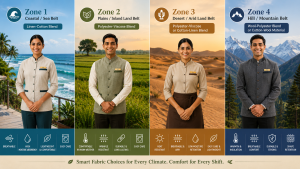
Hotel Uniform Fabric For Desert Area
States: Rajasthan, Gujarat, parts of western Madhya Pradesh
Jaipur and Jodhpur experience peak summer temperatures which reach 45 to 48 degrees Celsius while maintaining extremely low humidity levels. The staff requirements for this fabric challenge need materials which will reflect heat instead of absorbing it while they need colors which will maintain their original state under continuous sunlight.
Choosing the right fabric for employee uniforms in desert conditions is as much a staff welfare decision as an aesthetic one.
Front of the House
- Fabric: The fabric consists of a lightweight polyester-viscose material which has a UV-reflective finish and a cotton-linen blend that displays traditional desert heritage properties.
- Colour: The saffron, ivory, and sand, and regional heritage colors create a color palette which uses colorfast dyes to produce essential colorfast dyes.
- Comfort & Long Hours: The design lets people wear loose clothing while they need to stay away from tight collars and cuffs during the hottest summer days.
- Durability: Sun-bleaching resistance is critical; poor dye quality shows within one season
Housekeeping
- Fabric: Cotton-polyester (60/40), breathes in dry heat; polyester adds durability for daily wash-and-wear
- Colour: Beige, tan, soft rust, manages dust visibility across long shifts
Food & Beverage
- Kitchen: The fabric consists of 100 percent cotton which becomes the only suitable choice in desert conditions and kitchen environments.
- Food Services: Restaurants with air conditioning systems can operate their facilities using lightweight polyester-viscose material which maintains a proper balance between lightweight and heavier fabric.
Hotel Uniform Fabric For Hill Area
States: Himachal Pradesh, Uttarakhand, Jammu & Kashmir, Sikkim, Darjeeling, Arunachal Pradesh, Meghalaya, Nagaland
The hill properties maintain their operations during all year which includes their sub-zero winter periods. The uniform brief here flips entirely because the primary concern now requires warmth together with wind resistance and layering, instead of breathing ability.
Front of the House
- Fabric: The fabric consists of a wool-polyester blend or cotton-wool material which maintains its structured shape and warm properties in damp hill air conditions.
- Colour: The deep greens and forest tones together with warm burgundy, create a color scheme that matches both mountain and heritage lodge design styles.
- Comfort & Long Hours: Thermal underlayers; well-constructed outer garments that do not restrict movement in cold lobbies
- Durability: Durable hotel workwear are wool blends resist pilling; hold colour through mountain-damp conditions
Housekeeping
- Fabric: Cotton-flannel or polycotton with thermal lining option, warmth for staff working in cooler service areas and outdoor corridors
- Colour: Earthy tones, practical and regionally appropriate
Food & Beverage
- Kitchen: The fabric consists of 100 percent cotton which becomes necessary under desert conditions when kitchen temperatures combine with the heat.
- Food Services: The restaurants require lightweight polyester-viscose fabric while their air conditioning systems enable them to use fabrics that weigh more than this.
Choosing Right Across Zones
India’s climate diversity demands that hotel uniform decisions start with geography, not catalogue preference. A custom uniform manufacturer in India with genuine regional expertise builds fabric specifications around the actual working conditions of your staff, not a single national standard that compromises across every zone.
The right fabric, in the right weight, for the right climate is what your team actually wears every day. That is where the decision should start.





Pingback: Winter Uniform Designs for Hotel Staff | Stylish & Warm Workwear