
Healthcare Uniform Manufacturing: Fabric, Comfort & Hygiene
People usually associate healthcare with advanced technology and essential medical treatments and highly trained medical professionals. The uniform functions as an essential yet unrecognized element which helps maintain patient safety while boosting staff morale throughout every hospital corridor.
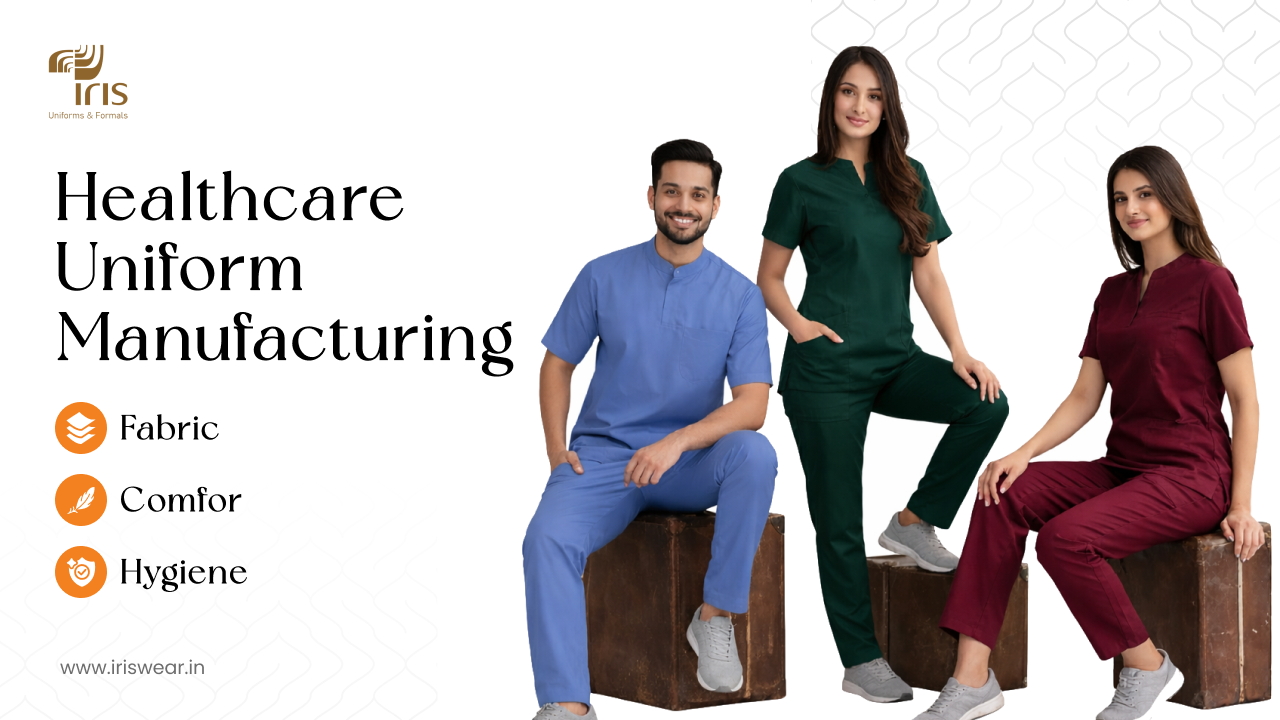
The uniforms encompass everything from the crisp white coat that a physician wears to the flexible medical scrubs that a nurse wears for long shifts. Uniforms represent more than clothing; at Iris Wear, we see uniforms as a tool for healthcare workers to use to provide safe patient care, much like any other medical device they would use in providing care to patients.
This article will take you on a journey through the healthcare supply chain and highlight the factors that are influencing how hospitals operate, such as selecting appropriate fabrics, prioritising hygiene, and providing comfort, to illustrate how each of these factors contributes to transforming the operations within hospitals today.
The Evolution of the Hospital Wardrobe
Gone are the days when a “one size fits all” approach worked for hospital staff. Today, customized hospital uniforms are the standard. Why? Because a surgeon’s needs are entirely different from those of a lab technician or a front-desk receptionist.
Modern hospital uniform manufacturers have had to evolve. They aren’t just sewing fabric together; they are crafting solutions. A modern uniform needs to be a shield against pathogens, a cooling system for a hardworking professional, and a professional branding tool all at once.
The Science of Fabric: More Than Just Cotton
The biggest mistake anyone can make in healthcare apparel is choosing fabric based on price alone. In a clinical setting, the fabric is the first line of defense. As leading medical textile suppliers in India, providers should focus on three main pillars when selecting materials:
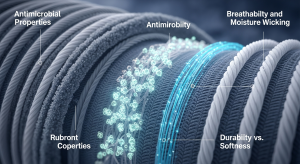
Antimicrobial Properties
Hospitals are, by nature, environments where bacteria and viruses live. Modern uniforms often feature antimicrobial treatments that prevent the growth of germs on the fabric itself. This doesn’t just keep the wearer safe; it prevents the uniform from becoming a “bridge” that carries bacteria from one patient’s room to another.
Breathability and Moisture Wicking
Healthcare workers operate their duties throughout the entire day. Medical personnel experience continuous sweating because they must either respond to urgent situations or work in operating theaters for extended periods. Manufacturers utilize moisture-wicking technology which draws sweat away from the skin surface to enable rapid evaporation. Staff members maintain their body temperature because they provide them with materials that prevent the “heavy” sticky sensation which causes exhaustion.
Evolution of the Hospital Wardrobe
Durability vs. Softness
A hospital uniform is likely the most washed garment in the world. The fabric requires high-temperature industrial laundering capabilities because complete sterilization demands it. The texture needs to avoid creating a sandpaper-like sensation. Our fabric selection process involves choosing materials which maintain their original softness after multiple washes but will not fade or shrink when tested through one hundred launderings.
Comfort: Because 12-Hour Shifts are Hard Enough
Nurses identify their most important clothing feature which they should wear to perform their work duties as comfort.
The selection of best hospital uniforms has evolved through time into its present form. Past uniform designs created garments which restricted movement because of their rigid structure. Our current design work uses principles from “Active-Wear” movement. Experts use four-way stretch fabrics which enable total body movement for our clothing design. A nurse should be able to reach up for a monitor or bend to assist a patient while their uniform provides complete freedom of movement.
Ergonomic Design Features
Comfort isn’t just about the fabric; it’s about the “little things” that make a big difference:
- Pocket Placement: Dedicated slots for pens, pagers, mobile phones, and stethoscopes.
- Side Slits: To allow for better hip movement.
- Tagless Labels: To prevent neck irritation during long shifts.
- Elastic Blends: Ensuring the waistbands stay comfortable from hour one to hour twelve.
Hygiene: The Invisible Standard
Hygiene in healthcare manufacturing isn’t just about the final product; it’s about the process. As a top uniform manufacturing company, Iris Wear maintains strict “clean-room” standards during production.
Indian hospitals which use standard suppliers for their operations need to verify that their chosen suppliers possess knowledge of “Bloodborne Pathogen” requirements. The fabrics used in scrubs must have fluid-resistant properties which enable liquid spills to form beads that roll off the material instead of being absorbed. The basic function of this equipment provides critical protection for workers who operate within dangerous work environments.
Branding and Identity through Customization
A hospital is a brand. When a patient sees a team dressed in cohesive, high-quality customized hospital uniforms, it builds immediate trust. It signals organization, cleanliness, and professionalism.
Customization allows hospitals to:
- Color-Code Departments: Making it easy for patients to identify who is a nurse (e.g., navy blue) versus who is a physiotherapist (e.g., teal).
- Embroidery: Adding hospital logos and staff names for a personal, professional touch.
- Fit Profiles: Offering different cuts for different body types, ensuring everyone feels confident in their professional “skin.”
Why India is a Global Hub for Medical Textiles

Why India is a Global Hub for Medical Textiles
You might wonder why so many international healthcare chains look toward medical textile suppliers in India. The reason is a unique blend of heritage and technology. India has a centuries-old history of textile mastery, but today, that’s paired with world-class chemical treatments and high-volume manufacturing capabilities.
As uniform suppliers in India, suppliers should offer premium quality at a scale that makes sense for large hospital chains, without losing the “boutique” feel of custom design.
Finding the Right Partner
Choosing a uniform manufacturing company is a long-term partnership. You aren’t just buying a shipment of clothes; you are choosing the people who will dress your heroes every day.
At Iris Wear, we don’t just manufacture; we consult. We help you choose the right blend of polyester, cotton, and spandex. We help you figure out the best Hospital Nurse Uniform Design that balances tradition with modern functionality.
Final Thoughts
The hospital uniforms show their actual function when you observe them during your next hospital visit. The uniforms serve their purpose because they function as hard-working material for the individuals who wear them. The materials protect against bacteria while controlling temperature and delivering comfort and showing brand identity.
Your search for advanced medical scrubs will end at our place which provides exceptional medical scrubs but we also offer complete facility design solutions which begin with our premium thread selection.
Frequently Asked Questions
What is the best fabric for medical scrubs?
Most experts recommend a blend. A mix of Polyester (for durability and wrinkle resistance), Cotton (for breathability), and Spandex (for stretch) is generally considered the “Gold Standard” for modern scrubs.
How often should hospital uniforms be replaced?
Given the high frequency of washing and the exposure to harsh chemicals, we recommend a refresh every 12 to 18 months to ensure the antimicrobial treatments and fabric integrity remain at peak performance.
Why is color-coding important in hospitals?
It improves “visual communication.” In an emergency, being able to quickly spot a doctor versus an orderly based on the color of their uniform can save vital seconds.
Can medical scrubs be stylish?
Absolutely! Modern “Jogger-style” scrubs and “Slim-fit” designs are becoming incredibly popular, helping healthcare workers feel good about their appearance while remaining fully compliant with hospital standards.