
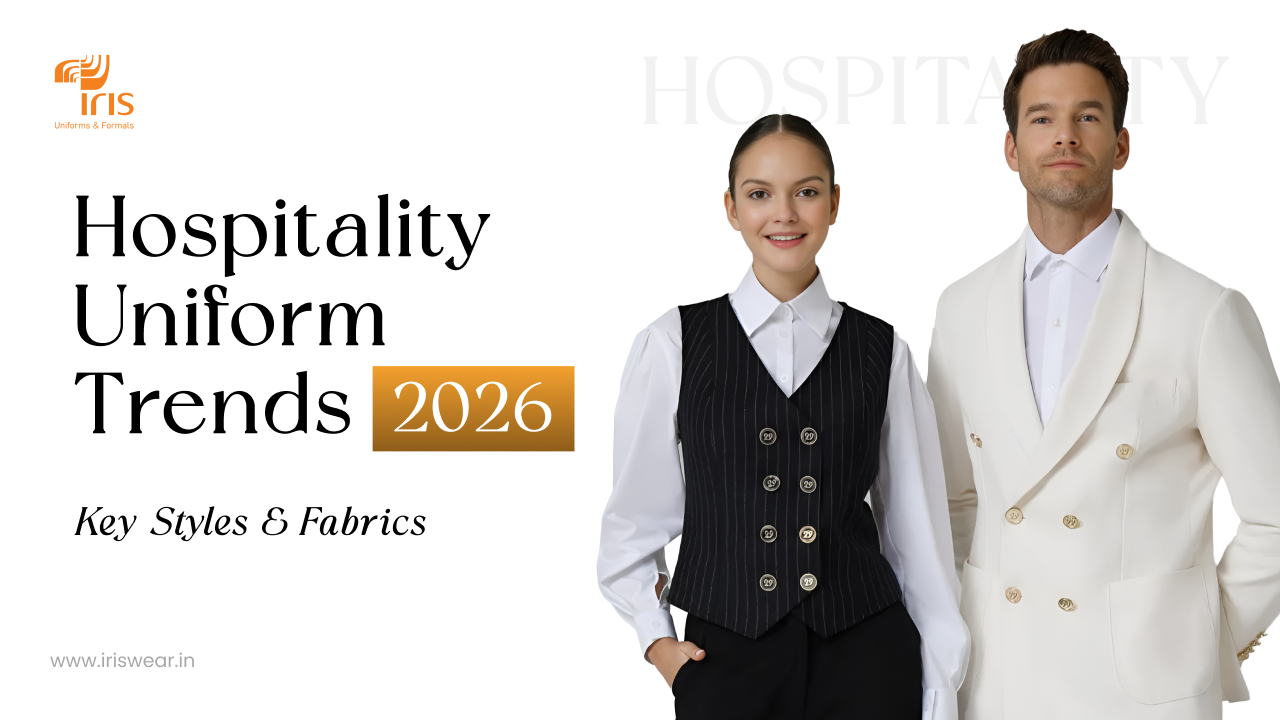
Hospitality Uniform Trends 2026: Key Styles & Fabrics
Walk into any hotel, restaurant, or resort and within seconds you’ve already formed an impression, before a word is spoken, before a menu is handed over, before anyone introduces themselves.
That impression? A big part of it comes from what the staff are wearing.
It sounds like a small thing until you think about how much a uniform actually communicates, the tone of the experience, the standard of the brand, how seriously the business takes the details. Guests read all of that in the first few seconds, often without consciously realising they’re doing it.
In 2026, hospitality businesses are finally treating uniforms with the strategic seriousness they deserve. Here’s what’s driving that shift, and what it looks like in practice.
Key Style Trends for 2026
The following trends highlight how hospitality brands are balancing a high-end look with the practical needs of a modern, diverse workforce.
- Overall Design Direction: Minimalism Meets Functionality
Uniforms are shifting toward clean, simple designs with minimal branding. The focus is on a polished look that is both practical and easy to wear.
- Front-of-House Uniform Trends
Front desk uniform design is moving toward coordinated colours with subtle branding, giving staff flexibility to personalise small elements like accessories and footwear. It sounds minor, but it makes a real difference to how people carry themselves at work.
- Back-of-House Uniform Trends
The uniform for housekeeping staff is finally getting the same design attention as front-of-house, breathable fabrics and durable materials built for long shifts and frequent industrial washing cycles. A functional housekeeping uniform doesn’t have to mean forgettable anymore.
- Gender-Neutral and Inclusive Design
Uniforms are becoming more inclusive, moving away from strict gender-based styles. Designs now focus on flexible fits that suit different body types.
- Athleisure Influence in Hospitality Uniforms
Stretchable fabrics and flexible fits are improving comfort in uniforms. They allow ease of movement while maintaining a clean and professional appearance.
Performance Fabrics and Smart Textiles
Performance fabrics now fulfill standard requirements through their moisture-wicking and temperature control and odour-eliminating functions which used to be considered elite features. These features help maintain comfort across demanding roles.
Smart textiles are also being adopted, including fabrics with temperature responsiveness, UV protection, and antimicrobial properties, enhancing both functionality and wearability.
Sustainability and Eco-Friendly Fabrics
Sustainability is now a key factor in uniform selection. Businesses are focusing on materials and processes that reduce environmental impact. Suppliers offer recycled polyester, organic cotton, and other certified fabrics. There is also greater focus on garment lifespan, recycling, and responsible disposal. Uniform programs are now a visible part of how brands meet their sustainability goals.
Colour and Pattern Trends
Uniform color palettes are moving toward muted earthy tones like terracotta, sage, and slate, paired with deeper accents such as navy, burgundy, and forest green. Patterns remain subtle, with textures, tonal checks, and minimal geometric details replacing bold and heavy prints.
Tailoring, Fit, and Comfort Innovations
Fit is now a key focus, with better size options and improved grading to suit different body types. Some roles also include custom sizing for a more precise fit.
Comfort is enhanced through seamless construction, ergonomic cuts, and adjustable elements like waistbands and hems, allowing better movement and flexibility.
Technology Integration in Uniforms
The points below outline how technology is improving uniform design and management:
- RFID-Enabled and Trackable Uniforms
Hotels are using RFID tags in uniforms to track usage, manage laundry, and automate inventory. This helps reduce loss and improves stock control.
- Safety and Hygiene Features
Uniforms now include antimicrobial fabrics and fluid-resistant finishes. Design elements also help reduce contamination and meet guest expectations.
- Durability and Lifecycle Management
Businesses are focusing on uniforms that last longer and offer better value over time. Factors like wash durability, color retention, and strength are now considered early in the selection process.
Uniforms by Hospitality Segment
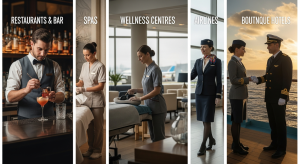
Uniforms by Hospitality Segment
The following segments highlight how uniform design varies across different hospitality environments:
Luxury Hotels & Resorts
Here, uniform design is treated as brand communication closely aligned with the modern hotel uniform trend.. Every detail, fabric quality, tailoring, accessories, and even how the uniform ages, reflects the positioning of the property. Investment is high, customisation is standard, and the expectation is that uniforms will be refreshed in line with broader brand evolutions rather than simply replaced when worn out.
Boutique Hotels
Boutique properties establish their unique identity through their use of uniforms. The designers choose to work with local designers and use unexpected color palettes and create casual clothing designs which show their commitment to creating informal and character-based designs. The brief requires designers to create a look which appears natural but not corporate.
Restaurants & Bars
The range here is enormous, from fine dining establishments where uniforms rival luxury hotel standards, to casual concepts where a well-designed apron over a clean t-shirt is the entire brief. The consistent thread is intentionality: the custom restaurant uniforms feel considered most effective for that specific concept, not generic.
Spas & Wellness Centres
Comfort and calm are the watchwords. Soft, natural fabrics. Muted, soothing palettes. Relaxed but professional silhouettes. Spa uniforms are increasingly designed in harmony with the interior environment, part of the overall sensory experience rather than separate from it.
Cruise Ships
Cruise ship uniforms must fulfil multiple requirements because they need to function throughout different situations. The main design elements of the project require durable materials which provide practical use and easy-to-understand visual elements while design work remains secondary to operational requirements.
Airlines & Airport Lounges
Aviation uniforms stand out as a prominent category within hospitality design because airlines treat their uniform relaunches as vital branding events. Even the Airport Ground Staff Uniforms Design must be in 2026 fashion trend features, designs that people can wear comfortably throughout their workday while maintaining a polished appearance and unique style which suits various work environments.
Implementation and Sourcing Guide
Below are essential guidelines for sourcing, testing, and maintaining uniforms effectively:
How to Choose the Right Uniform Partner
You should evaluate hotel staff uniform suppliers through their catalogues but choose a supplier who comprehends your business requirements and sustainability targets and brand requirements. Fabric samples and minimum order details and references from comparable hospitality businesses matter more than any polished sales presentation.
Cost vs Durability Analysis
Understanding uniform manufacturing cost in India helps businesses make smarter procurement decisions; the cheapest option rarely delivers the best value over time. The most effective way to reduce uniform costs isn’t buying cheaper, it’s buying smarter, with durability and lifecycle value built into the decision from the start. Build a simple lifecycle model covering replacement
Staff Feedback and Uniform Trials
The testing process needs to start with proper trials which should include staff from every role who will be asked to evaluate their comfort and movement capability and their fit through a complete work shift. Staff who feel good in their uniforms carry themselves differently, and that shows up directly in how they present to guests.
Maintenance and Laundry Best Practices
Your organization should collaborate with its supplier to determine appropriate washing temperatures and drying methods and ironing requirements because all uniforms will deteriorate through incorrect laundry methods. The organization needs to establish explicit rules from the first day of employment and perform ongoing garment inspections, which need to begin before signs of visible damage appear.
Conclusion & What’s Coming Next
The 2026 hospitality uniform functions as more than a dress code requirement because it demonstrates brand values while promoting staff health and meeting actual work requirements. The businesses which view their uniform program as a genuine investment rather than a cost they should reduce already observe benefits through increased staff confidence and improved guest perception.
The future of uniforms will develop into advanced technology which provides more personalisation features while meeting stricter environmental requirements and enabling seamless transitions between athletic performance apparel and business workwear. The hospitality businesses which successfully navigate these industry changes will achieve better staff appearance through their teams but also greater employee comfort and confidence which enables them to create memorable guest experiences.